Seasonal Home Decluttering
by Admin
Posted on 25-11-2025 02:13 PM
Why Seasonal Decluttering Matters
Mental and Emotional Benefits
A cluttered home often leads to a cluttered mind. Studies have shown that living in disorganized spaces can increase stress, reduce focus, and even impact sleep quality. Seasonal decluttering provides regular opportunities to reset your environment, which in turn promotes mental clarity and emotional well-being. Letting go of unused or unnecessary items can feel liberating, almost like shedding emotional weight.
Physical Space Optimization
As the seasons change, so do your needs. Winter clothing takes up space you'll need for lighter spring and summer apparel. Holiday decorations stored year-round can consume valuable closet or storage room real estate. Regular decluttering ensures your home functions efficiently, with room for what's currently relevant and seasonal.
Sustainability and Mindful Consumption
Frequent decluttering encourages awareness of consumption habits. When you regularly assess what you own, you become more intentional about future purchases. It also creates opportunities to donate gently used items, recycle responsibly, or repurpose things creatively contributing to a more sustainable lifestyle.
How to Prepare for Seasonal Decluttering
Set Clear Goals
Before diving in, define what you want to achieve. Are you aiming to free up space in your closet? Clear out expired pantry items? Create a play area for kids as the weather warms? Having specific goals keeps you focused and motivated.
Gather Supplies
Have the right tools on hand: trash bags, donation bins, cleaning supplies, labels, and storage containers. A few simple tools can make the process of Seasonal Home Decluttering smoother and more efficient.
Schedule Time
Block off dedicated time whether it's a full day or a few hours each weekend. Treat it like an important appointment. Breaking the process into manageable chunks by room or category helps prevent burnout.

Room-by-Room Decluttering Strategies
Kitchen and Pantry
Start with your kitchen, especially the pantry and fridge. Discard expired food, consolidate spices, and donate duplicate kitchen gadgets. Consider seasonal eating patterns store summer grilling tools in spring and clear space for holiday baking supplies in fall.
Pro Tip: Use clear, labeled containers for dry goods. Not only do they look neat, but they also make it easier to see what you have and avoid overbuying.
Wardrobe and Closet
Rotate clothing with the seasons. Store off-season clothes in under-bed bins or vacuum-sealed bags to save space. As you switch outfits, try the one in, one out†rule donate an old item every time you buy something new.
Bonus Benefit: A streamlined wardrobe makes getting dressed easier and reduces decision fatigue.
Living Areas and Entryways
These high-traffic zones tend to collect clutter quickly. Declutter coffee tables, entertainment centers, and entryway consoles. Install hooks for seasonal accessories (like hats and scarves in winter), and donate old books, magazines, or decor that no longer serve you.
Maintaining Momentum Year-Round
Create a Donation Station
Keep a bin in a closet or garage specifically for donation items. Whenever you come across something you no longer use, toss it in. When the bin is full, schedule a drop-off. This habit prevents clutter from reaccumulating.
Embrace the 90/90 Rule
Ask yourself: Have I used this in the last 90 days? Will I use it in the next 90? If the answer is no to both, its time to let it go. This simple rule is highly effective for making quick decluttering decisions.
Celebrate Progress
Acknowledge your efforts whether its treating yourself to a favorite coffee or simply enjoying your newly organized space. Positive reinforcement builds lasting habits.
Seasonal Tips for Each Time of Year
Spring: Renewal and Refresh
Spring is perfect for deep cleaning and fresh beginnings. Clean windows, wash curtains, and air out stored winter items. Focus on outdoor gear, gardening supplies, and childrens clothing that no longer fits.
Summer: Lighten Up
Keep your home cool and clutter-free. Store heavy blankets and winter decor. Donate old beach towels or sports equipment. This is also a great time to clear digital clutter photos, files, and apps.
Fall: Prepare and Organize
As temperatures drop, prep for winter. Check smoke detectors, organize holiday decorations, and assess your coat closet. Use this time to declutter kids school supplies and update emergency kits.
Winter: Cozy and Calm
With more time spent indoors, winter is ideal for tackling sentimental items or paperwork. Sort through holiday cards, old photos, and filing cabinets. Create a calm, cozy environment by minimizing visual clutter.
FAQs
How often should I declutter my home?
Ideally, perform a thorough decluttering every three to four months—once per season. Light touch-ups can be done monthly to maintain order.
What should I do with items I no longer need?
Donate usable items to charities, sell them online, or organize a community swap. Recycle what you can, and responsibly dispose of broken or unusable items.
How do I stay motivated during decluttering?
Break tasks into small steps, play music, and set timers (like the Pomodoro technique). Focus on the end result how good your space will feel when it's organized.
Is it okay to keep sentimental items?
Yes but be selective. Choose a few meaningful pieces to keep, and consider digitizing photos or letters to save space. Store sentimentals in labeled boxes so they don't get lost in the clutter.
What if I feel overwhelmed?
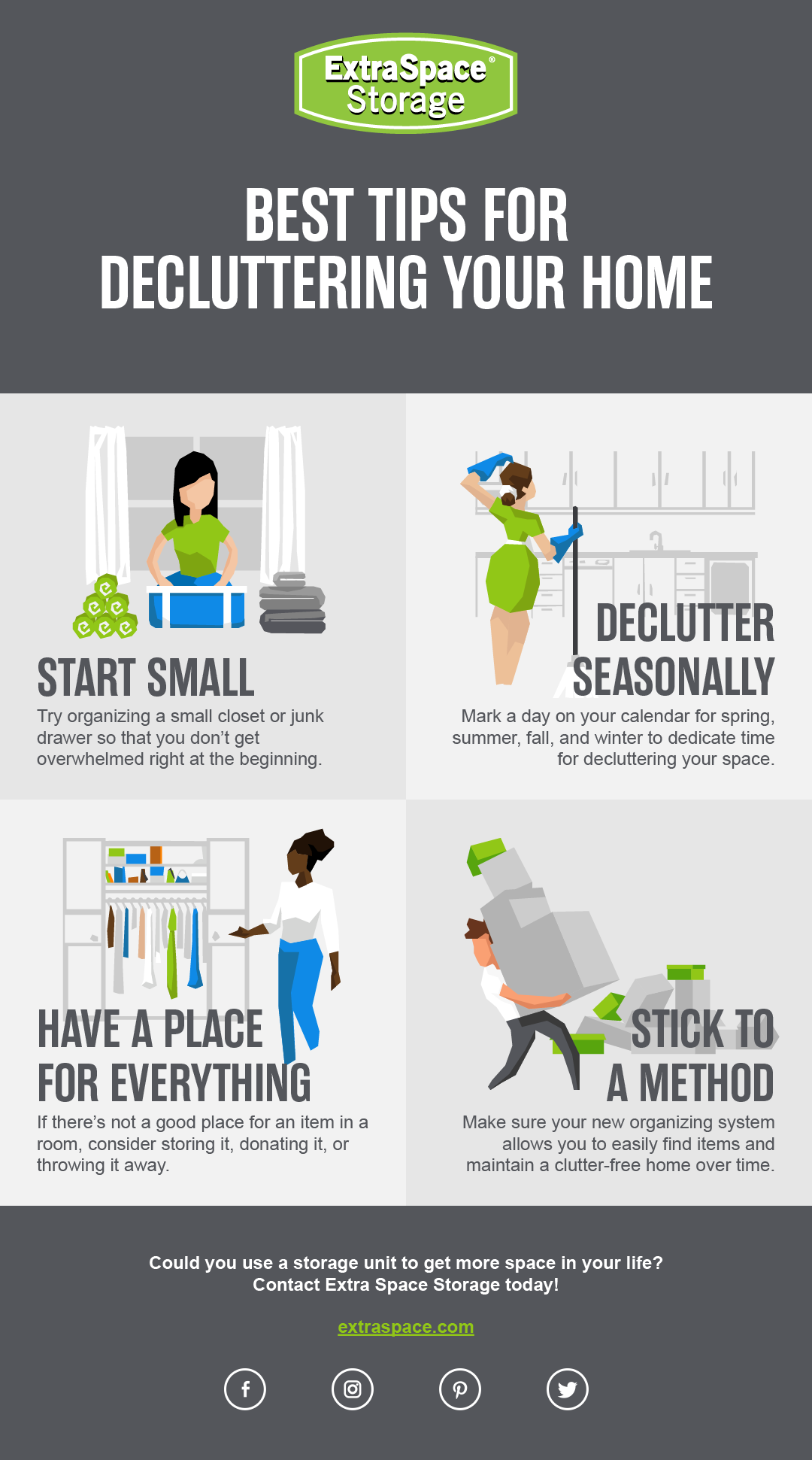
Start small pick one drawer or shelf. You don't have to do everything at once. Progress, not perfection, is the goal.
Can decluttering improve my productivity?
Absolutely. A clean, organized space reduces distractions and mental fatigue, helping you focus better and accomplish more with less stress.